Why I can be right even without grinding symptoms
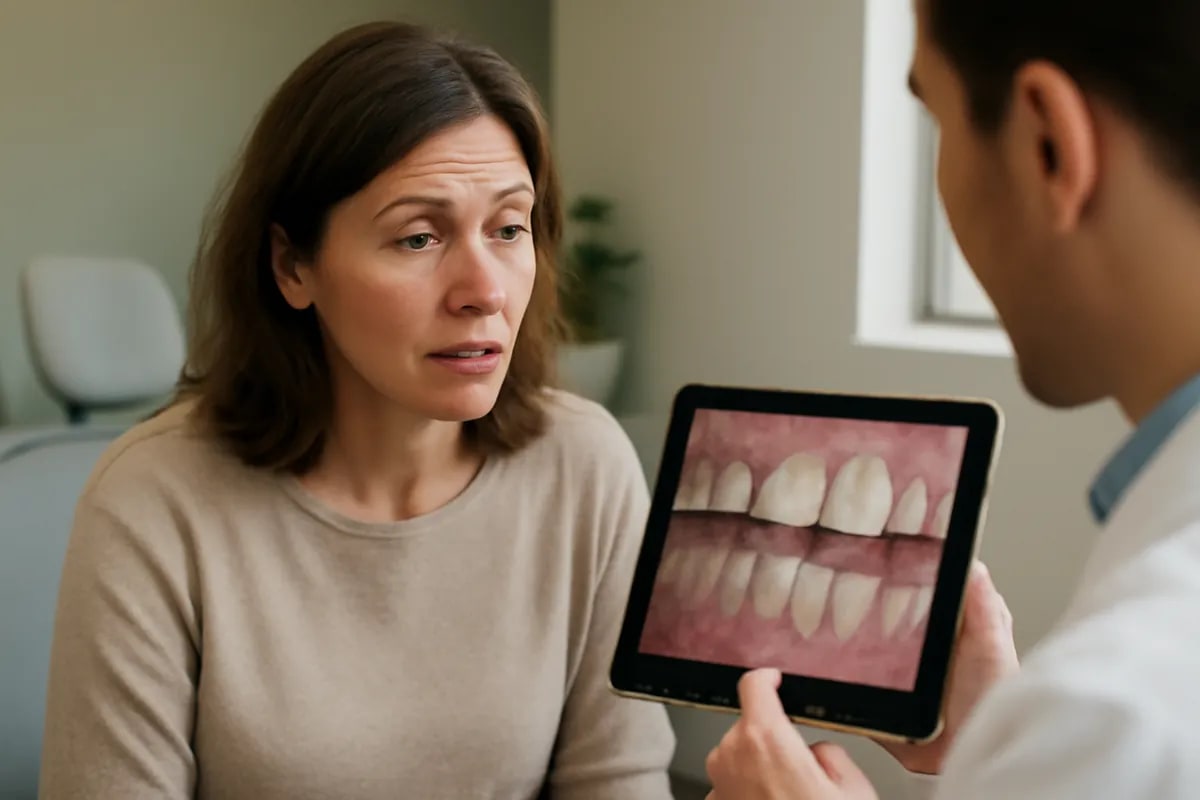
If you've never woken up mid-grind and your jaw doesn't ache in the morning, it's fair to question a nightguard recommendation. But grinding, which dentists call bruxism, is often silent. Many people sleep through it completely and never connect a dull morning headache to what happened while they were asleep. The real clue usually shows up on the teeth themselves: flattened edges, thinning enamel, or small chips that weren't there a few years ago. If I see that pattern during your exam, the recommendation isn't a guess. It's a response to physical evidence your teeth are already showing me, even when nothing feels wrong yet.
Grinding that never wakes you up
Nighttime grinding and clenching usually happen during lighter stages of sleep, not the deep stages you'd remember. That's part of why so many patients are surprised by the recommendation. Your body can be actively clenching for minutes at a time without pulling you out of sleep at all.
Stress is a common driver, but it isn't the only one. Sleep position, certain medications, caffeine late in the day, and how your upper and lower teeth meet can all play a role. Some people simply have jaw muscles that are strong enough to do real damage without producing pain in the process. The muscles get a workout. The teeth absorb the consequences.
No pain doesn't mean no damage
Here's the misconception I hear most often: patients assume that if they don't wake up during the night, and don't feel obvious jaw pain, grinding simply isn't possible. It's an understandable assumption. It's also not how enamel wear works.
Visible wear is frequently the first sign, and for a lot of patients, it stays the only sign for years. Enamel doesn't regenerate, so once an edge has flattened or a corner has chipped away, that change is permanent evidence of a habit your nerves never bothered to report to you.
The signs I'm looking for in your mouth
During an exam, I'm looking at the biting surfaces of your teeth for flattened or worn edges, especially where a tooth used to have a slightly rounded or pointed shape and now looks noticeably shorter or squared off. I'll also check the sides of your tongue for scalloping, a wavy indentation pattern that forms when the tongue presses against clenched teeth, and the inside of your cheeks for a raised white ridge called linea alba, which forms from repeated pressure against the teeth.
I'll usually ask about morning jaw tightness or headaches too, even mild ones. Most patients haven't connected those to nighttime grinding until I ask the question directly. On their own, none of these signs proves grinding beyond doubt. Together, they build a pattern that's hard to explain any other way.
Protecting your teeth while you sort out the cause
A nightguard's main job isn't to stop you from clenching. It's to put a durable barrier between your upper and lower teeth so the force lands on plastic instead of enamel. Even if the underlying habit continues, the guard absorbs the wear that would otherwise be permanently reshaping your teeth night after night.
Outside of wearing a guard, a few habits genuinely help: cutting back on late-day caffeine, being mindful of daytime clenching at your desk or in traffic, and paying attention to whether stress spikes line up with weeks when your jaw feels tighter than usual in the morning. None of these replace a guard on their own, but they can reduce how hard your muscles are working overnight.
Signs it's time to call sooner rather than later
Most grinding-related wear is something to address at a normal pace, not an emergency. A few changes are worth a call sooner:
- New clicking, popping, or locking when you open or close your jaw
- Sudden difficulty opening your mouth fully
- A tooth that feels loose, shifted, or different when you bite down
- A visible crack or chip on a biting surface that wasn't there before
- A tooth that's newly sensitive to cold or pressure without an obvious cause
- Morning headaches that have gone from occasional to almost daily
Custom guards and what they're weighed against
For patients whose wear pattern suggests a bite or jaw alignment component, I'll sometimes also discuss a bite adjustment or, in select cases, a referral for an airway evaluation. The guard protects the teeth in the meantime regardless of which direction that conversation goes.
What to ask before you decide
- Which specific teeth show the wear pattern you're describing to me?
- Would a custom guard fit and feel meaningfully different from a pharmacy one?
- Could my bite or jaw alignment be contributing to this, not just stress?
- Is this wear new since my last visit, or has it likely been building for years?
- Should I also be evaluated for a sleep or airway issue while we're at it?
Questions I hear about nightguards
Can I be grinding even if I don't feel particularly stressed? Yes. Stress is one contributor among several, and plenty of people grind during periods that don't feel unusually stressful at all.
Will a nightguard fix my bite, or just protect it? A standard guard protects the teeth from further wear. It doesn't reposition your bite. If alignment is part of the picture, that's a separate conversation.
How long does a nightguard typically last? A well-made custom guard often lasts several years with normal care, though heavier grinders may wear through one faster and need it checked more often.
Can children grind their teeth too? Yes, it's fairly common in childhood and often resolves on its own, though a dentist should still monitor any wear that shows up on baby or early adult teeth.
What if I don't think I can tolerate wearing something at night? Most patients adjust within a week or two. If a standard guard genuinely isn't workable for you, tell your dentist. There are different designs and thicknesses worth trying before giving up on the idea entirely.
The takeaway for your next appointment
A nightguard recommendation without obvious symptoms isn't your dentist reaching for something to sell you. It's usually a direct response to wear, scalloping, or muscle tension we can see and feel during your exam, even when you can't feel any of it yourself. Ask what specifically prompted the recommendation. A dentist who's looking at real evidence should be able to point to it on your own teeth, not just describe grinding in general terms.
Related reading
This connects to a couple of other things patients often ask about: teeth feeling loose after switching Invisalign trays and whether Invisalign can correct bite alignment. For more, see the pieces on one-sided jaw pain after a long dental visit and how dentures and implants differ for jawbone preservation. For the broader topic list, see the full dental topics index.
Wear patterns don't lie, even when sleep does.